

Tel
:+86 - 17718123415
E-Mail
:info@sailsolaress.com
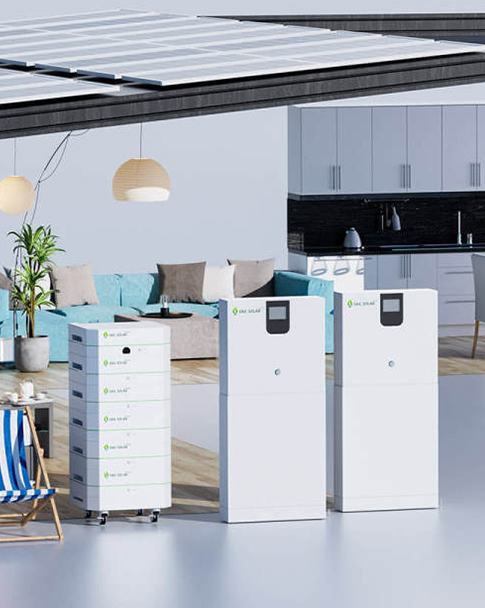
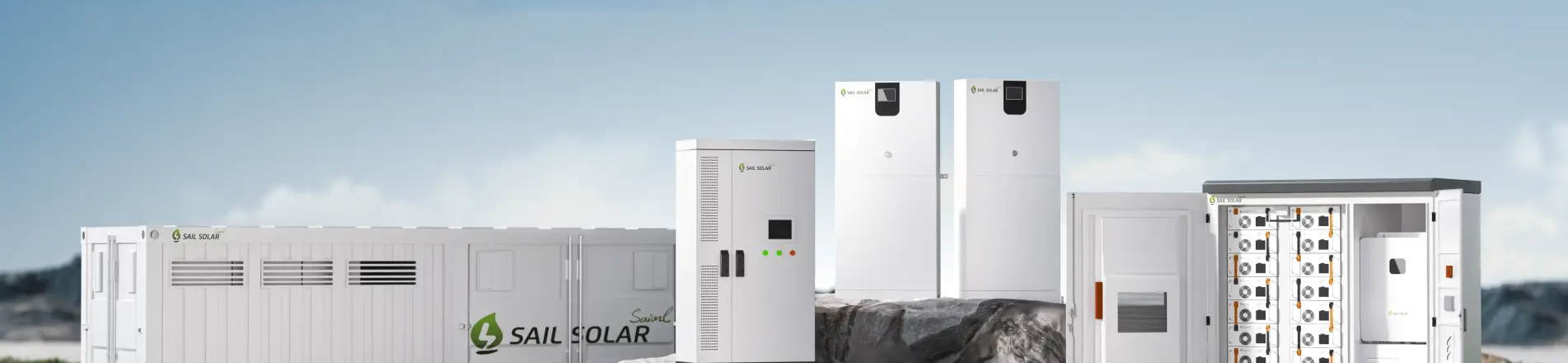
As the global demand for household energy self-sufficiency keeps rising, more and more homeowners overseas are planning to install residential energy storage systems.
However, many families get stuck choosing between high voltage and low voltage lithium ion batteries when purchasing home storage batteries.
Which one is better for home use, high voltage or low voltage residential lithium ion storage battery? What are their core differences, applicable scenarios and long term maintenance costs?
In this guide, we break down key selection tips of high voltage VS low voltage household lithium ion batteries, helping you avoid common pitfalls caused by blind trend chasing.
1. What Are High-Voltage & Low-Voltage Lithium-ion Batteries?
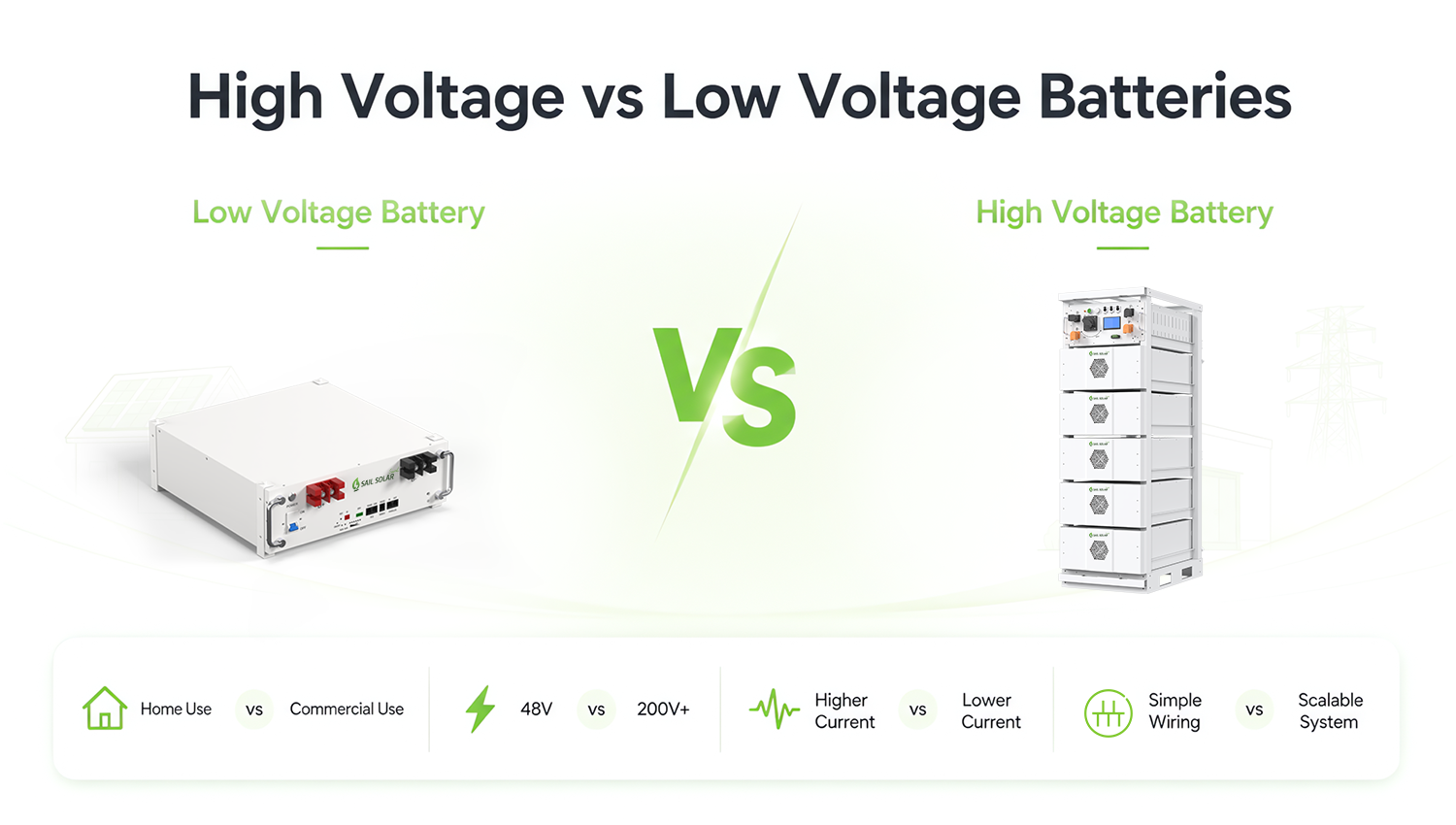
Based on rated voltage, mainstream lithium-ion batteries for residential energy-storage are divided into two categories: 48V low-voltage home energy-storage battery and 150-500V high-voltage stacked energy-storage battery.
Low-voltage energy-storage batteries generally take 48V as the rated voltage, with fewer battery cells connected in series inside the battery pack, they can work directly with low-voltage on-grid or off-grid inverters. By contrast, high-voltage residential lithium-ion storage batteries are assembled with multiple cells in series for a higher-voltage level. They usually need to be matched with dedicated high-voltage hybrid inverters, and have become one of the fastest-growing energy-storage solutions in the overseas residential storage market in recent years.
With 16-year practical experience in the energy-storage manufacturing industry, our team has handled countless customized home-energy-storage projects across Europe, America, Southeast Asia and other regions.
From real-world cases, we have noticed many buyers place orders for high-voltage storage batteries just because they are popular online. Later, they run into serious troubles such as inverter incompatibility and over-budget installation costs.
When picking household storage batteries, matching your household load demand and inverter specifications always matters more than chasing hot-selling products.
2. High-Voltage VS Low-Voltage Home Storage Battery: Core Performance Comparison
2.1 System Efficiency & Energy Loss
High-voltage lithium-ion residential energy-storage systems deliver higher working efficiency during large-power discharge. Because of the higher voltage, they generate lower current under the same power output, which greatly cuts down heat loss over long-hour energy supply.
This advantage stands out especially for large-capacity off-grid home energy-storage systems that need to run high-power household appliances for a long time.
48V low-voltage home lithium batteries are more likely to produce extra heat loss when outputting high power. Yet for small-and-medium-size households with low daily electricity consumption, the efficiency gap between these two solutions is barely noticeable in daily-use scenarios.
2.2 Inverter Compatibility
Compatibility is one of the most overlooked long-tail points when sourcing home energy-storage batteries. Low-voltage 48V lithium-ion batteries enjoy broader compatibility with most standard low-voltage hybrid inverters and off-grid inverters on the market.
If you already own a low-voltage solar inverter, upgrading your energy-storage system with a 48V battery will save you the cost of replacing your existing equipment.
High-voltage stacked household lithium batteries cannot operate with ordinary low-voltage inverters. You have to invest in a special high-voltage hybrid inverter to make the whole storage system work.
This is a non-negotiable hardware requirement that many first-time buyers ignore.
2.3 Installation & Scalability
Scalability is a top priority for homeowners who plan to expand their solar-storage capacity in the future. Most high-voltage household lithium-ion batteries adopt modular stacked design.
Home owners can add extra battery modules later to upgrade their usable energy capacity, without replacing the entire storage system. This flexible expansion feature makes high-voltage systems ideal for users who expect rising household power demand in coming years.
Traditional 48V low-voltage home energy-storage batteries are expandable to a limited extent. Once you hit the maximum capacity supported by your inverter, further capacity expansion will become difficult and costly.
2.4 Safety, Maintenance & Service Life
Both high-voltage and low-voltage lithium-ion household storage batteries are equipped with built in BMS (Battery Management System) for over charge, over discharge and short circuit protection.
From our years long aftersales case data, high voltage systems require stricter installation standards and professional electricians for routine inspection because of their higher working voltage.
48V low voltage lithium ion batteries carry lower risks during daily maintenance, making them a beginner friendly option for remote off grid households with limited local technical support.
3. Who Should Choose High Voltage Home Lithium ion Battery?
High voltage residential storage batteries are recommended if you match any of the conditions below:
--Your household runs high power electrical appliances frequently and has a large daily power consumption
--You are buying a new hybrid inverter and intend to build a long term expandable solar storage system
--You live in an area with unstable grid power supply and need long-hour off grid backup power
4. Who Is 48V Low Voltage Home Energy Storage Battery More Suitable For?
A 48V low voltage lithium ion battery will be your cost effective pick when:
--You have moderate to low daily household electricity usage
--You already own a compatible 48V solar inverter and want to add battery storage without big hardware upgrades
--You need a budget-friendly backup power solution for small scale residential solar projects
5. Final Buying Checklist Before Purchasing Your Home Energy Storage Battery
After comparing high voltage VS low voltage lithium ion batteries, do not rush into your purchase decision. Always check these 3 key factors: inverter compatibility, your daily energy consumption, and future capacity expansion plans.
Every household’s solar storage requirement is unique. There is no universal “best” home storage battery that fits all families.
Whether you are looking for high voltage stacked lithium ion battery or cost effective 48V low voltage energy storage battery, picking the system matching your real world demand will always bring you the most stable and rewarding off grid or grid tie solar experience.
If you need customized residential energy storage solution consultation, feel free to reach out to our professional engineering team.
 IPv6-Netzwerk unterstützt
Eine Nachricht hinterlassen
Scannen zu Wechat :

Scannen zu WhatsApp :